

Walk down any beauty aisle or scroll through social media, and you will find dozens of products all claiming to be "natural" and "transformative" for your hair. The problem is that most of these claims are not backed by solid science. Knowing which ingredients genuinely work, and why, makes all the difference between wasting money and actually improving your hair health. This guide cuts through the noise with evidence-based clarity, covering the best natural ingredients, how to assess them, and how to build a routine that delivers real results.
Table of Contents
- How to assess natural ingredients for hair health
- Coconut oil: Why it really works for hair health
- Rosemary extract: Natural UV protection and scalp benefits
- Comparison of top natural ingredients for hair
- Tips for maximising results with natural ingredients
- Why most advice on natural hair care misses the mark
- Further support: Natural hair care with Farmed Beauty
- Frequently asked questions
Key Takeaways
| Point | Details |
|---|---|
| Choose evidence-backed solutions | Select natural ingredients with proven efficacy and safety, not just marketing claims. |
| Combine topical and nutrition approaches | Pair topical oils and extracts with a healthy diet for optimal hair health. |
| Focus on your hair type | Match natural ingredients and routines to your individual hair needs for best results. |
| Routine and method matter | Consistent use and proper application are as important as the ingredient itself. |
| Safety first with new products | Always dilute essential oils and patch test before full application to avoid reactions. |
How to assess natural ingredients for hair health
Before diving into individual ingredients, it is essential to know what makes a natural hair care solution truly effective. Not all "natural" products are equal, and understanding the criteria for evaluation will help you make smarter choices.
The term "natural" generally refers to plant-based ingredients that undergo minimal processing. However, natural origin alone does not guarantee safety or efficacy. A well-researched ingredient needs to meet several criteria before it earns a place in your routine.
Key criteria for evaluating natural hair ingredients:
- Scientific evidence: Is there published research, ideally randomised controlled trials, supporting the ingredient's claimed benefits?
- Safety profile: Has the ingredient been tested for scalp and skin tolerance? Does it require dilution?
- Hair and scalp compatibility: Does the ingredient suit your specific hair type, whether fine, coarse, curly, or colour-treated?
- Application method: Is the method practical and consistent with how studies were conducted?
- Realistic expectations: Does the evidence support the specific claim being made, or is it overstated?
Application method matters enormously. Research-informed hair care tips consistently highlight that scalp massage twice weekly, combined with proper dilution of essential oils, forms the foundation of effective natural hair care routines. Simply applying an oil without a structured method rarely produces the results seen in clinical studies.
It is also worth distinguishing between topical applications and nutrition. Topical oils and extracts work directly on the hair shaft and scalp, while dietary nutrients support hair growth from within. Both matter, but they serve different functions. A BBC Food nutrition article notes that scalp massage twice weekly and careful dilution of essential oils are among the most evidence-informed application benchmarks available.
Pro Tip: Before adding any new oil or extract to your routine, perform a patch test on your inner forearm and wait 24 hours. Even plant-based ingredients can cause reactions in sensitive individuals.
Coconut oil: Why it really works for hair health
With criteria in mind, let us look at the evidence for one of the most popular natural hair ingredients. Coconut oil has been used for centuries across South Asia and the Caribbean, but modern science now explains exactly why it works.

The key lies in lauric acid, a medium-chain fatty acid that makes up roughly 49% of coconut oil's composition. Unlike most other oils, lauric acid has a low molecular weight and a straight chain structure, which allows it to penetrate the hair shaft rather than simply coat the surface. This penetration reduces the swelling and contraction of the hair fibre during wetting and drying cycles, which is a primary cause of protein loss and breakage.
Research confirms that coconut oil reduces protein loss in both damaged and undamaged hair, and that a pre-wash application is more effective than post-wash use. When applied before shampooing, the oil fills the hair shaft and limits water absorption, reducing the mechanical stress that wet hair experiences.
How to use coconut oil effectively:
- Apply to dry hair 30 to 60 minutes before washing, or leave overnight for deeper treatment
- Focus on mid-lengths and ends, where hair is oldest and most prone to damage
- Use a small amount, roughly a 50 pence coin-sized portion for medium-length hair
- Rinse thoroughly with a gentle, sulphate-free shampoo
- For fine or oily hair, apply sparingly and avoid the scalp directly
"Coconut oil was the only oil found to reduce protein loss for both undamaged and damaged hair when used as a pre-wash and post-wash treatment." This finding places it in a category above most other plant-based oils for structural hair protection.
One important caution: overuse of coconut oil can make hair feel stiff, brittle, or hydrophobic over time, particularly for those with low-porosity hair. Low-porosity hair already resists moisture absorption, and heavy oil use can worsen this. Limit use to once or twice per week.
Interestingly, enriched coconut oils may offer even greater benefits. A randomised double-blind controlled study found that Vatika Enriched Coconut Hair Oil, which combines coconut oil with herbs including henna, amla, and lemon, outperformed plain coconut oil across multiple hair health markers. This suggests that synergistic formulations can amplify the benefits of a single ingredient. You can read more about the benefits of coconut oil for hair in detail.
Pro Tip: If your hair feels waxy or weighed down after using coconut oil, try applying it only from the mid-shaft downwards and reduce the amount used. Less is genuinely more with this ingredient.
Rosemary extract: Natural UV protection and scalp benefits
While coconut oil addresses breakage, rosemary stands out for its UV protection and scalp stimulation. This makes it a complementary rather than competing ingredient.
Rosemary (Rosmarinus officinalis) contains a rich profile of polyphenols and diterpenes, including rosmarinic acid and carnosic acid. These compounds act as antioxidants, neutralising free radicals generated by UV radiation before they can damage the hair shaft and scalp. Research confirms that rosemary extracts protect hair from UV-induced damage through these polyphenol and diterpene pathways, making it particularly valuable for those who spend significant time outdoors.
Beyond UV protection, rosemary oil has demonstrated promising results for scalp health and hair density. Several studies have compared rosemary oil favourably to minoxidil 2% for hair growth, with fewer side effects such as scalp itching. The mechanism appears to involve improved microcirculation in the scalp, which supports follicle activity.
Evidence-based rosemary oil usage protocol:
- Dilute rosemary essential oil to 2 to 3% in a carrier oil such as jojoba or coconut oil (approximately 6 drops per tablespoon of carrier oil)
- Apply to the scalp and massage gently for 3 to 5 minutes
- Perform this routine twice weekly, ideally in the evening
- Leave on for at least 30 minutes before washing, or overnight
- Always patch test before first use
"Consistent scalp massage with diluted essential oils, performed twice weekly, is among the most evidence-informed approaches in natural hair care." Rosemary oil fits this protocol precisely.
Safety is non-negotiable with essential oils. Rosemary essential oil is highly concentrated and must never be applied undiluted to the scalp. For guidance on how to use essential oils safely, proper dilution and patch testing are the two most important steps. Those who are pregnant or have epilepsy should consult a healthcare professional before using rosemary oil.
Comparison of top natural ingredients for hair
Now that you have seen the individual evidence, here is a side-by-side comparison to help guide your choice.
| Feature | Coconut oil | Enriched coconut oil | Rosemary extract |
|---|---|---|---|
| Primary benefit | Reduces protein loss | Reduces hair fall, adds shine | UV protection, scalp stimulation |
| Penetration | Deep (lauric acid) | Deep plus herbal synergy | Topical/scalp level |
| Best for | Dry, damaged, porous hair | All hair types | Thinning hair, UV-exposed hair |
| UV protection | Minimal | Minimal | Strong (polyphenols) |
| Scalp benefit | Moderate | Moderate to high | High (microcirculation) |
| Evidence level | Strong RCT data | Strong RCT data | Growing clinical evidence |
| Frequency | 1 to 2x weekly | 1 to 2x weekly | 2x weekly |
| Risk of overuse | Moderate (low-porosity hair) | Low | Low when diluted |
Research confirms that all three key ingredients outperform many standard products for targeted benefits, particularly when used consistently and correctly. The enriched coconut oil formulation specifically delivers additional control of hair fall and improved shine compared to plain coconut oil. Meanwhile, rosemary extract's UV protection correlates directly with its antioxidant content, meaning higher-quality extracts offer stronger protection.
Combining ingredients can be highly effective. For example, using coconut oil as a pre-wash treatment twice weekly and applying diluted rosemary oil on alternate days addresses both structural damage and scalp health simultaneously. For seasonal considerations, you might also find it helpful to review winter hair and skin tips, as cold weather significantly affects how oils and extracts behave on hair.
Tips for maximising results with natural ingredients
No matter which ingredient you choose, results depend on how you use them consistently and correctly. Here is a practical framework for getting the best from your natural hair care routine.
-
Establish a twice-weekly oil routine. Consistency is the single biggest predictor of results. Choose a fixed day, such as Sunday and Wednesday evenings, and apply your chosen oil or extract. A structured schedule removes the guesswork and mirrors the routines used in clinical research.
-
Combine coconut oil and rosemary for multi-dimensional benefit. Mix a few drops of diluted rosemary oil into your coconut oil before applying as a pre-wash treatment. This addresses protein loss, scalp circulation, and UV defence in one step.
-
Always dilute essential oils correctly. A 2% dilution is standard for scalp use. This means approximately 12 drops of essential oil per 30ml of carrier oil. Never exceed a 3% concentration for regular use.
-
Patch test every new ingredient. Apply a small amount to your inner elbow, leave for 24 hours, and check for redness, itching, or swelling before full application.
-
Support your routine with balanced nutrition. Protein, iron, zinc, and vitamins D and B12 all support healthy hair growth. Topical treatments work best when your body has the nutritional foundation it needs.
-
Adjust based on your hair's feedback. If hair feels dry and brittle, increase coconut oil frequency. If the scalp feels irritated, reduce rosemary oil concentration or frequency. Your hair's response is the most reliable guide.
Research-informed routine hair care advice consistently emphasises that consistent routines with proper dilution are the benchmarks that separate effective natural hair care from ineffective experimentation.
Pro Tip: Keep a simple hair journal for four to six weeks when starting a new ingredient. Note application date, amount used, and how your hair feels the following day. Patterns emerge quickly and help you fine-tune your routine.
Why most advice on natural hair care misses the mark
Having covered practical strategies, it is worth challenging some common natural hair care myths and highlighting what really drives results.
Most online advice about natural hair care falls into one of two traps. Either it overstates the benefits of a single ingredient as a universal solution, or it dismisses natural ingredients entirely in favour of synthetic alternatives. Both extremes miss the point.
The reality is that no single ingredient works the same way for every hair type. Penetrating oils like coconut oil are most beneficial for damaged, high-porosity hair, while non-penetrating oils are better suited for adding surface smoothness and shine. Applying coconut oil to low-porosity hair without understanding this distinction can actually worsen the condition. Method and fit matter far more than the ingredient itself.
Marketing hype is another significant problem. Many products list rosemary or coconut oil on the label in concentrations too low to have any measurable effect. A product containing 0.1% rosemary extract will not deliver the same results as a properly diluted application of a high-quality extract. Reading ingredient lists critically and prioritising evidence over packaging claims is a skill worth developing.
There is also a tendency to overlook the indirect but important role of nutrition. No topical formula compensates for a diet chronically low in protein or iron. The hair advice most people miss often involves this balance: topical ingredients and internal nutrition working together, not competing. Treating hair care as purely external is a common and costly mistake.
Finally, patience is underrated. Most clinical studies showing significant results from natural ingredients run for 12 to 24 weeks. Expecting dramatic change after two or three applications is unrealistic. Commit to a well-designed routine for at least three months before assessing results.
Further support: Natural hair care with Farmed Beauty
To make evidence-based, natural hair care even more accessible, you can explore curated solutions backed by the research discussed above.
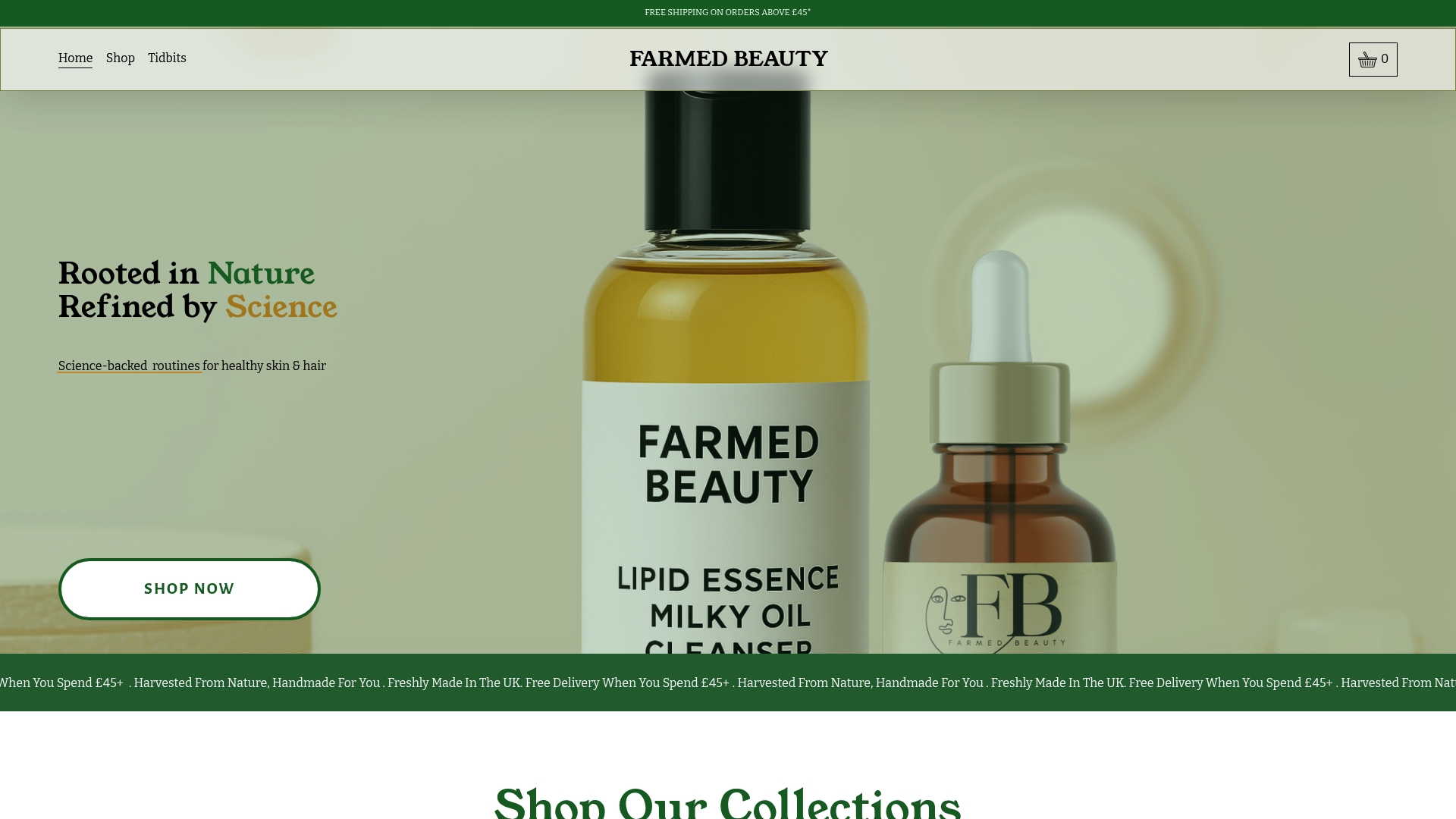
Farmed Beauty is a science-backed natural hair and skin care brand founded and led by a Medical Doctor with a specialist interest in skin and hair conditions. Every product is carefully chosen to reflect what the evidence actually supports, not what marketing trends suggest. You can browse the natural hair care shop to find products formulated with proven ingredients at effective concentrations. For a broader view of what is available, explore the collections for healthy hair, where each collection is designed to address specific hair concerns with natural, science-informed solutions. Farmed Beauty makes it straightforward to choose ingredients that genuinely work for your hair type and lifestyle.
Frequently asked questions
Can I use coconut oil on fine or oily hair?
Yes, but use a small amount and apply mainly as a pre-wash treatment to avoid heaviness. Lauric acid in coconut oil penetrates the hair shaft effectively, but fine or oily hair can feel weighed down if too much is used.
How often should I massage rosemary oil into my scalp?
Twice weekly at night is a common, research-informed routine; always dilute the essential oil before applying. Research benchmarks for scalp massage frequency consistently point to twice-weekly application as both safe and effective.
Is there clinical evidence that enriched coconut oil is better than plain coconut oil?
A randomised controlled trial found enriched coconut oil outperformed plain oil for shine, strength, and dandruff across multiple hair health markers.
Does nutrition matter for natural hair care results?
Yes, overall nutrition supports healthy hair growth from within, but topical ingredients offer targeted, direct benefits to the hair shaft and scalp. Emphasis on nutrition for overall health does not diminish the value of well-chosen topical solutions.
Do I need to patch test natural oils or extracts?
Yes, always patch test new ingredients for 24 hours before full application to prevent potential allergic reactions, even with well-tolerated natural oils.