
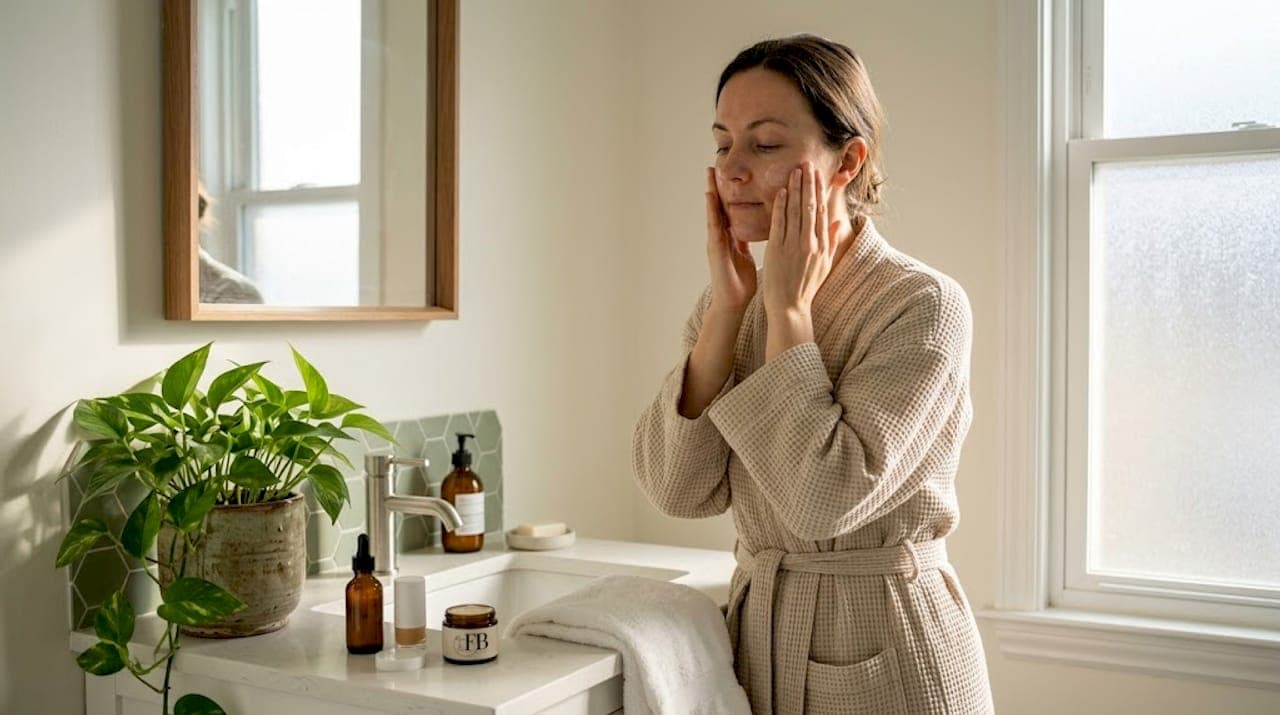
You follow every piece of advice you can find. You switch to "natural" products, simplify your routine, and still wake up to redness, tightness, or that familiar sting. For adults in the UK with sensitive skin, this is a deeply frustrating cycle. The truth is, gentle cleansing and frequent moisturising to protect the skin barrier are the cornerstones of effective sensitive skin care. But knowing the right steps, the right timing, and the right products to avoid makes all the difference between comfort and constant irritation.
Table of Contents
- Gather your essentials: What you need and what to avoid
- Step-by-step sensitive skin care routine
- Identifying and managing irritants: Avoidance strategy
- Protecting your skin barrier in daily life
- Why 'natural' isn't enough: Our perspective on real sensitive skin comfort
- Explore gentle, science-led skincare with Farmed Beauty
- Frequently asked questions
Key Takeaways
| Point | Details |
|---|---|
| Barrier protection first | Focus on emollient use and reducing irritant exposure to keep sensitive skin healthy. |
| Timing is crucial | Apply moisturiser/emollient immediately after bathing and reapply as needed throughout the day. |
| Avoid triggers | Systematically avoid fragranced, soapy, or harsh products and change only one product at a time. |
| Consult for reactions | If your skin reacts or worsens, seek advice from your pharmacist, GP, or dermatologist. |
Gather your essentials: What you need and what to avoid
Having established why your skin needs evidence-backed support, let's set up the right foundation with products and habits that reduce irritation from the outset.
The first step is knowing what belongs in your routine and what absolutely does not. For sensitive skin, less is genuinely more. A stripped-back selection of well-chosen, fragrance-free products will always outperform a shelf full of trendy formulas.
What to include in your essentials kit:
- A gentle, fragrance-free cleanser or emollient wash
- A soap substitute for face and body (many emollients double as wash products)
- A rich, unperfumed moisturiser or emollient cream
- Broad-spectrum SPF 30 or higher sun protection
- Soft, clean cloths or flannels for patting skin dry
What to remove from your bathroom immediately:
- Foaming soaps and bar soaps with detergent bases
- Bubble baths, shower gels, and bath bombs
- Perfumed body lotions or toners
- Products with alcohol listed high in the ingredients
- Rough exfoliating scrubs or abrasive tools
The science behind this is straightforward. Avoidance of soaps and bubble baths, combined with using soap substitutes and emollient washes, directly reduces the number of flares and episodes of irritation. Rubbing skin dry with a towel adds unnecessary friction to already reactive skin. Patting gently is a small habit that delivers a real, measurable difference over time.
Explore gentle skincare options that are formulated with barrier support in mind, and take time to read labels before purchasing anything new.
Quick-reference guide: Essentials vs. red flags
| Category | Choose | Avoid |
|---|---|---|
| Cleanser | Fragrance-free emollient wash | Foaming soaps, shower gels |
| Moisturiser | Unperfumed emollient cream | Perfumed body lotions |
| Sun protection | Mineral SPF 30+, unscented | Spray SPFs with alcohol |
| Fabric contact | Soft cotton, loose fit | Wool, synthetic fibres |
| Bathing habits | Lukewarm water, pat dry | Hot water, vigorous towel rubbing |
If you are unsure where to begin with non-irritating cleansers, it helps to look for products that are specifically formulated and tested for sensitive or eczema-prone skin.
Step-by-step sensitive skin care routine
Now that you have the right essentials, here is exactly how to use them in a daily routine designed for sensitive UK skin.
A consistent sequence matters more than you might expect. Skin responds well to predictability. Disrupting the order or skipping steps, even occasionally, can undo days of progress.
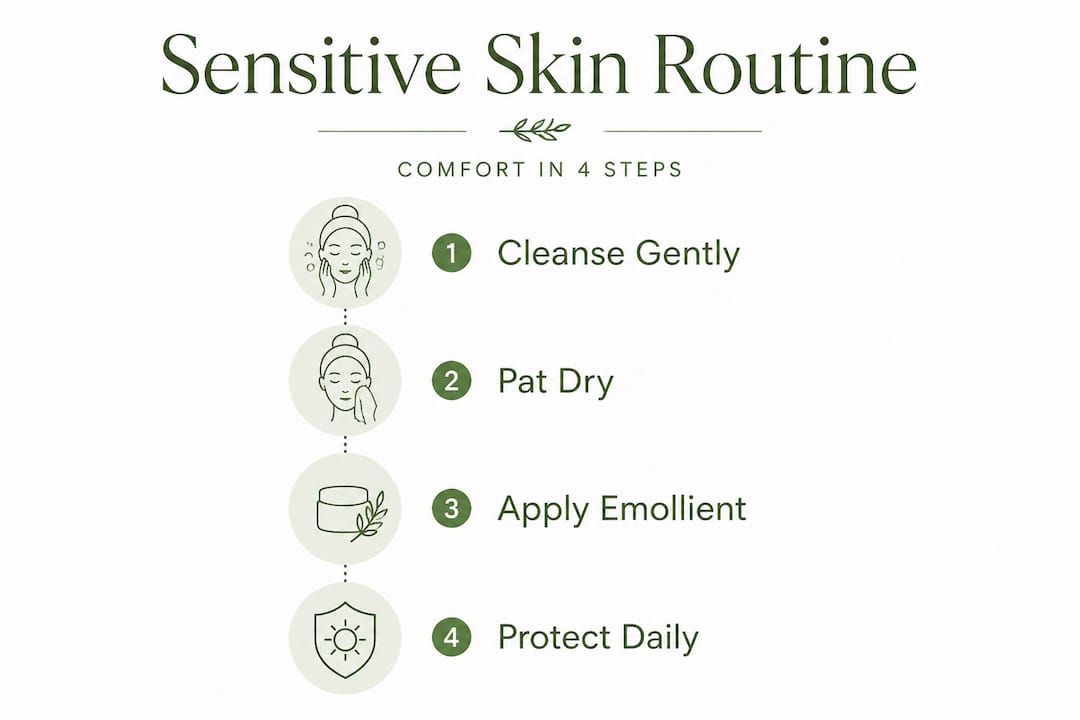
Your daily sensitive skin routine:
- Cleanse gently. Use a fragrance-free emollient wash or simply rinse with lukewarm water. Avoid hot water, which strips natural oils from the skin surface.
- Pat skin dry. Use a soft, clean towel. Press gently rather than rubbing. This reduces friction and preserves the moisture you are about to lock in.
- Apply emollient immediately. Timing is critical here. Apply emollient soon after bathing while skin is still slightly damp. This traps moisture in the upper layers of the skin rather than allowing it to evaporate.
- Reapply throughout the day. One application is not enough for most people with sensitive or eczema-prone skin. Reapply your emollient multiple times daily, particularly after handwashing or any water contact.
- Apply sun protection in the morning. After your emollient has absorbed, apply a broad-spectrum SPF 30 or higher. Choose an unscented, mineral-based formula where possible.
- Avoid layering multiple new products. Introduce only one new product at a time and wait at least a week before adding another.
For those interested in oil cleansing methods, this can be a particularly gentle option for removing makeup or daily grime without disrupting the skin barrier. And do not forget areas like the lips, which also benefit from regular emollient use for lips to prevent dryness and cracking.

Barrier-focused vs. aggressive routines: A comparison
| Approach | Barrier-focused routine | Aggressive or trend-led routine |
|---|---|---|
| Cleansing | Lukewarm water or emollient wash | Hot water, foaming cleansers |
| Exfoliation | None or very occasional, gentle | Regular physical or chemical exfoliation |
| Moisturising | Multiple times daily, immediately post-wash | Once daily or as remembered |
| New products | One at a time, patch-tested | Multiple new products at once |
| Reaction response | Stop product, seek advice | Push through or add more products |
Pro Tip: Always patch-test any new product on a small area of skin, such as the inner wrist or behind the ear, for at least 24 hours before applying it to your face or body. This simple step can prevent a widespread reaction.
Identifying and managing irritants: Avoidance strategy
Once your routine is set, understanding triggers and how to deal with reactions can make all the difference to results and comfort.
Sensitive skin does not always react to the same thing twice. Triggers can shift with the seasons, with stress, or with a change in diet or environment. Keeping a simple log of what you use and when reactions occur is one of the most practical tools available to you.
How to identify your personal irritants:
- Write down every product you use on your skin, including washing powder and fabric softener
- Note any new products introduced in the week before a reaction
- Record environmental factors such as cold weather, air conditioning, or swimming
- Pay attention to fabrics in direct contact with your skin
- Track food or stress events if reactions seem to have no obvious product cause
The key principle here is to change only one product at a time. If you swap your cleanser, your moisturiser, and your laundry detergent in the same week and then develop a reaction, you will have no way of knowing which product caused it. Systematic, one-at-a-time changes give you clear, actionable information.
Identifying and avoiding the triggering irritant is a central strategy for managing contact dermatitis, and when complete avoidance is difficult, pharmacists, GPs, and dermatologists can suggest ways to minimise exposure. Treatment often involves emollients and, where necessary, topical corticosteroids.
"Some emollients can irritate sensitive skin. If your skin reacts to a moisturiser or emollient, stop using it and seek advice from a pharmacist or GP. Changing the emollient is sometimes all that is needed."
This is an important point that many people overlook. Even products marketed as "gentle" or "natural" can cause reactions in certain individuals. Moisturisers can themselves irritate if they contain preservatives, fragrances, or other ingredients your skin does not tolerate.
For practical product swap advice and guidance on changing sensitive skincare products, it is worth taking a considered approach rather than making impulsive switches based on marketing claims.
When to seek professional support:
- If reactions are severe, widespread, or involve swelling
- If over-the-counter emollients are not improving dryness after two to four weeks
- If you suspect a specific allergen and want patch testing
- If you need prescription-strength treatment such as topical corticosteroids
Pro Tip: Keep a small notebook or use a phone note to log your skin's daily condition alongside any products used. After two to three weeks, patterns often become very clear.
Protecting your skin barrier in daily life
The final polish: keeping skin resilient means building in practical protection throughout your day and making routine adjustments when life changes around you.
Sensitive skin does not only need attention during your morning and evening routine. Daily activities, weather, and work environments all place ongoing demands on the skin barrier. Small, consistent adaptations can significantly reduce the frequency and severity of flares.
Practical daily protection habits:
- Wear rubber or nitrile gloves when washing up, cleaning, or handling chemicals
- Choose soft, breathable fabrics such as cotton next to the skin
- Avoid tight clothing that creates friction on reactive areas
- Use a gentle, fragrance-free laundry detergent and skip fabric softener
- Keep showers short (five to ten minutes) and use lukewarm rather than hot water
- Carry a travel-size emollient to reapply after handwashing throughout the day
Adapting to seasons and environments:
Cold, dry, and windy conditions in the UK autumn and winter months are particularly hard on the skin barrier. Central heating reduces indoor humidity further, which accelerates moisture loss from the skin surface. During these periods, increase the frequency of emollient application and consider switching to a richer, thicker formula.
Routine adjustments for weather are an important part of long-term sensitive skin management. What works in July may not be sufficient in January.
Sun protection and topical treatments:
Statistic to know: Topical calcineurin inhibitors, a class of anti-inflammatory medicines sometimes prescribed for eczema, may increase sensitivity to sunlight. If you are using these treatments, SPF 30 or higher is particularly important on exposed skin.
Even without prescription treatments, daily sun protection is a sound habit. UV exposure can trigger flares in some people with reactive skin, and mineral-based sunscreens tend to be better tolerated than chemical alternatives. Look for formulas labelled "sensitive skin" with zinc oxide as the active ingredient.
Adapting for work and travel:
If your work involves frequent handwashing, exposure to chemicals, or contact with potential irritants, barrier protection becomes even more important. Healthcare workers, hairdressers, and catering professionals are among those at highest risk of occupational skin reactions. Keeping emollient accessible at work and applying it consistently after each wash is a simple but highly effective measure.
When travelling, changes in climate, water hardness, and available products can all affect sensitive skin. Bring your trusted products rather than relying on hotel toiletries, which often contain fragrances and other potential irritants.
Why 'natural' isn't enough: Our perspective on real sensitive skin comfort
With the practical steps covered, here is our honest view on what actually works for people with sensitive skin, beyond the industry buzzwords.
There is a persistent belief that "natural" automatically means safe for sensitive skin. As a brand founded and led by a Medical Doctor, we understand why this idea is appealing. It is reassuring to think that ingredients harvested from nature will always be kinder to reactive skin. But the reality is more nuanced.
Poison ivy is natural. So is lanolin, which causes reactions in a significant number of people with eczema. Essential oils, widely celebrated in the wellness space, are among the most common causes of fragrance-related contact dermatitis. The ingredient's origin does not determine its compatibility with your skin. What matters is the formulation, the concentration, and your individual skin's response.
What we consistently see is that people with sensitive skin benefit most from two things: a consistent, evidence-driven routine and a clear understanding of their personal triggers. Neither of these things comes from chasing the latest "clean beauty" trend or switching products every few weeks in search of something better.
Comfort and results come from routine. They come from applying your emollient immediately after bathing, every single day, rather than occasionally. They come from removing known irritants systematically rather than all at once. They come from patience and observation, not from finding the perfect product.
At Farmed Beauty, we believe that science-backed and nature-inspired are not opposites. They work together. Our approach is to take ingredients that are genuinely beneficial, formulate them thoughtfully, and support them with the kind of evidence-based guidance you will find throughout our gentle skincare stories. Natural ingredients can absolutely be part of a sensitive skin routine. They just need to earn their place through results, not marketing.
Explore gentle, science-led skincare with Farmed Beauty
If you are ready to take the next step, Farmed Beauty offers a carefully curated range of products designed with sensitive skin in mind. Every formula is developed with barrier support at its core, using ingredients that are both nature-inspired and science-validated.

Whether you are looking to rebuild your routine from scratch or simply swap one product for something gentler, the range is designed to make that process straightforward and reassuring. You can explore skincare products suited to sensitive and reactive skin, or take a moment to read our story and understand the philosophy behind every product we make. Formulated with care, tested for compatibility, and created for real comfort on UK skin.
Frequently asked questions
How soon should I apply moisturiser after showering for sensitive skin?
Apply emollient immediately after bathing while skin is still slightly damp, ideally within two to three minutes of stepping out of the shower, to lock in moisture effectively.
What are the top ingredients to avoid in products for sensitive skin?
Avoid fragrances, soaps, bubble baths, foaming shower gels, and alcohol-based products. Stop using soaps and shower gels that cause irritation and switch to fragrance-free soap substitutes or emollient washes instead.
How many times a day should I apply emollient for dry, sensitive skin?
Emollient can be applied 2 to 4 times daily for very dry or sensitive skin, and ideally after every wash, not just morning and evening.
What should I do if my moisturiser starts to sting or burn?
Stop using the product immediately, rinse the area with cool water, and consult a pharmacist or GP. Some emollients can irritate skin, and switching to a different formulation is sometimes all that is needed.
Is sunscreen important for sensitive or eczema-prone skin?
Yes, particularly if you are using topical treatments. Topical calcineurin inhibitors increase sun sensitivity, so SPF 30 or higher is recommended, and unscented mineral formulas are generally the best-tolerated choice.