

Skincare shelves are full of promises. New trends appear every few months, each claiming to transform your skin in days. Yet many people find themselves cycling through products, spending more, and seeing less. The frustration is real and very common. What cuts through the noise is not the latest viral ingredient or at-home gadget, but a steady, science-backed approach led by clinical expertise. This article explains what doctor-led skincare actually means, why it outperforms trend-driven routines, which ingredients genuinely work, and how to know when professional oversight is essential for your skin and hair health.
Table of Contents
- What makes doctor-led skincare different?
- Evidence behind ingredients: what doctors actually recommend
- Who benefits most from doctor-led skincare?
- The reality of at-home devices and 'doctor-adjacent' claims
- Doctor-led skincare: what most guides miss
- Discover clinically-informed skincare for real results
- Frequently asked questions
Key Takeaways
| Point | Details |
|---|---|
| Personalised diagnosis matters | Doctor-led skincare tailors solutions to your unique needs, increasing effectiveness and safety. |
| Evidence over trends | Dermatologists rely on ingredients and approaches proven by research, not fleeting fads. |
| Know when to seek help | Professional guidance is crucial for stubborn, worsening, or risky skin concerns. |
| Not all claims are equal | Be sceptical of at-home devices and 'doctor-adjacent' marketing lacking robust evidence. |
| Science supports real results | Clinically informed routines set realistic goals, measured progress, and true skin health improvements. |
What makes doctor-led skincare different?
Most people build their skincare routine based on what they see online. A dermatologist recommends a serum on social media, a beauty editor praises a new acid, and suddenly everyone is layering actives without understanding how they interact. The result is often irritation, wasted money, and no real improvement.
Doctor-led skincare starts somewhere different. It begins with a proper assessment of your skin type, medical history, lifestyle, and specific concerns. Rather than guessing which product might work, a clinician identifies the root cause of your issue and selects ingredients accordingly. This is not just a more logical approach; it is a safer one.
"Doctor-led skincare is safer and more targeted for inflammatory, recurrent, or scarring risk conditions," according to NHS guidance on contact dermatitis. When a skin condition has the potential to scar or become chronic, clinical oversight is not optional. It is essential.
The difference between a trend-driven routine and a doctor-led one becomes very clear when you compare them side by side.
| Feature | Doctor-led skincare | Trend-driven skincare |
|---|---|---|
| Starting point | Clinical assessment | Product reviews or social media |
| Ingredient selection | Evidence-based, targeted | Marketing-driven, generalised |
| Monitoring | Ongoing, adjusted over time | Self-managed, often inconsistent |
| Safety checks | Supervised, contraindications considered | Rarely assessed |
| Outcome focus | Treating root cause | Managing surface appearance |
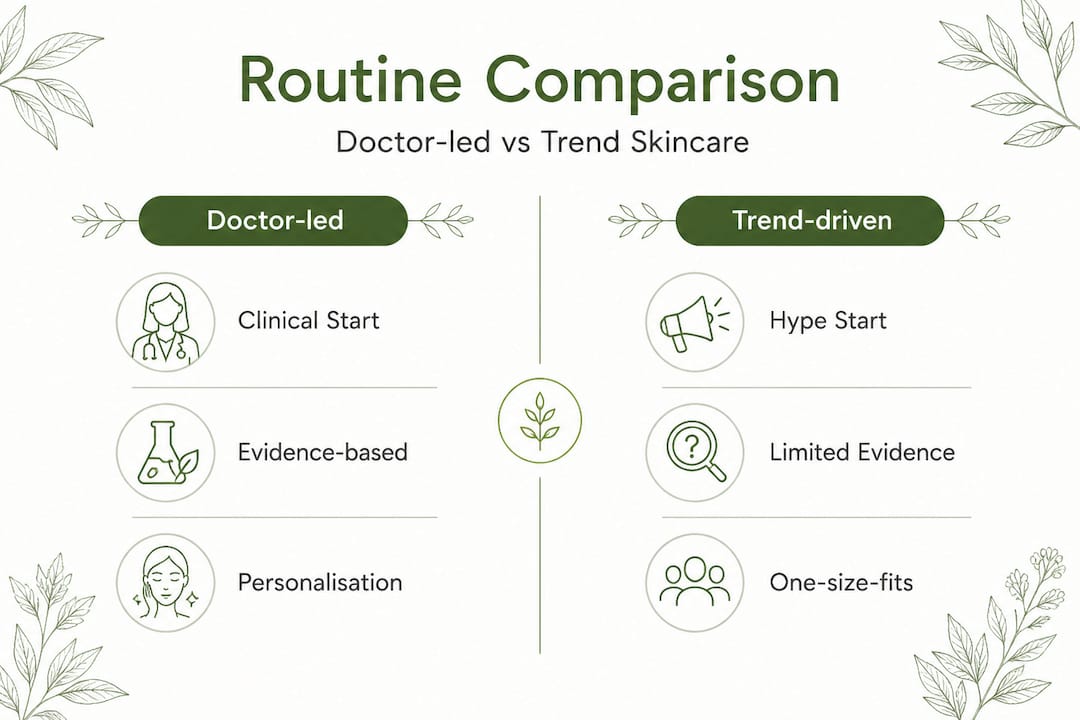
Well-structured skincare routines built on this model tend to produce more consistent results because they account for individual variation. Your skin is not the same as your friend's, and a routine that works beautifully for one person can cause real harm in another.
When should you involve a pharmacist, GP, or dermatologist directly? If your concern is mild and your skin responds well to gentle, well-formulated products, self-care may be sufficient. But when symptoms are persistent, worsening, or involve the risk of scarring, professional involvement is the right step.
Evidence behind ingredients: what doctors actually recommend
With the basics of doctor-led methodology outlined, let's see how this translates to ingredient selection in your daily products.
The skincare market contains thousands of ingredients. Most are harmless but ineffective. A smaller number have genuine clinical evidence behind them. Doctor-led skincare narrows the field dramatically by focusing on what the science actually supports. A recent Delphi consensus study reached expert agreement on 23 ingredients that dermatologists recommend for common skin concerns, reinforcing that evidence-based ingredient selection is the cornerstone of effective skincare.
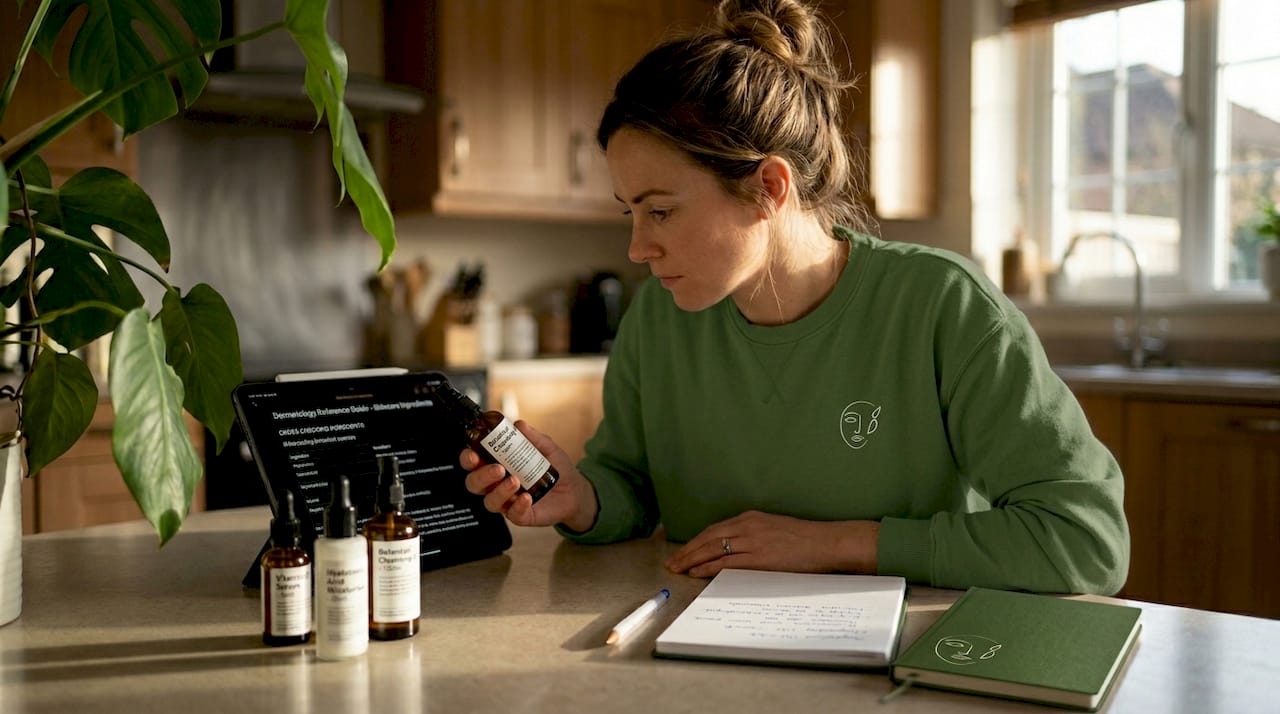
Here is how some of the most well-supported actives map to specific concerns:
| Active ingredient | Primary concern | Evidence level |
|---|---|---|
| Retinoids (retinol, tretinoin) | Ageing, acne, pigmentation | Very strong, multiple RCTs |
| Azelaic acid | Rosacea, acne, pigmentation | Strong, well-tolerated |
| Benzoyl peroxide | Acne (bacterial) | Strong, widely recommended |
| Niacinamide | Barrier support, pigmentation, redness | Strong, broad application |
| Salicylic acid | Acne, congestion, oily skin | Strong, keratolytic action |
| Vitamin C (L-ascorbic acid) | Antioxidant protection, brightening | Moderate to strong |
These are not exotic or newly discovered compounds. Most have decades of research behind them. What makes them doctor-led choices is not their novelty but their consistency. They have been tested, refined, and validated across diverse skin types and conditions.
By contrast, many trending ingredients arrive with compelling marketing but limited independent research. Ingredients like certain plant stem cells, collagen-infused mists, or "quantum" peptide complexes often lack the clinical trials needed to make meaningful claims. Exploring science-backed ingredients helps you understand the difference between genuine efficacy and clever packaging.
The practical takeaway is straightforward. If an ingredient has been recommended by dermatologists across multiple clinical settings, it has earned its place in your routine. If it has appeared in one brand campaign and three influencer posts, it warrants more scrutiny. Seeking expert guidance before adding new actives to your routine is always time well spent.
Who benefits most from doctor-led skincare?
Now that the scientific criteria for active ingredients are clear, it is time to ask: when does a doctor's oversight truly matter?
The honest answer is that almost anyone dealing with a persistent or complex skin concern benefits from clinical input at some point. But certain situations make professional involvement genuinely urgent rather than simply helpful.
Skin and hair concerns that consistently require clinical evaluation include:
- Eczema and atopic dermatitis: Chronic, relapsing, and often requiring prescription-strength treatments to manage flares safely
- Scarring acne: Delays in appropriate treatment increase the risk of permanent scarring
- Allergic or irritant contact dermatitis: Identifying the specific trigger requires patch testing, not guesswork
- Unexplained hair loss: Could indicate hormonal, nutritional, or autoimmune causes that need investigation
- Persistent rashes or reactions: Especially those that worsen with standard over-the-counter products
The NHS is clear that worsening conditions with irritant exposure, or those requiring prescription treatments, need proper clinical management rather than self-directed care.
Here are the highest-priority scenarios for seeking a doctor's input:
- Your skin concern has lasted more than six weeks without improvement
- You have tried two or more pharmacy products without any meaningful change
- Your condition is visibly worsening, spreading, or becoming painful
- You have a personal or family history of inflammatory skin conditions
- You notice signs of scarring, hyperpigmentation, or textural change
- A reaction has occurred after starting a new product or medication
Pro Tip: A good rule of thumb is the "two and six" check. If you have tried two products and waited six weeks without improvement, it is time to seek clinical advice. Self-care has a place, but it also has limits.
The long-term consequences of ignoring warning signs are real. Untreated scarring acne can leave permanent marks. Unmanaged eczema can lead to skin infections. Delayed acne treatment advice means more time for damage to accumulate. Investing in proper long-term skin health from the start is always more effective than trying to reverse established damage later.
The reality of at-home devices and 'doctor-adjacent' claims
But how much do 'doctor-branded' at-home gadgets deliver? Here is what the evidence and experts actually say.
At-home skincare technology has grown enormously. LED masks, microcurrent devices, ultrasonic cleansers, and radiofrequency tools are now widely available and often marketed with clinical-sounding language. "Clinically tested," "dermatologist-designed," and "proven technology" appear on packaging that may not reflect the full picture.
The reality is more nuanced. Some technologies used in clinical settings do have genuine evidence behind them. Red light therapy, for example, has shown promise for wound healing, anti-inflammatory effects, and mild photoageing. However, professional dosing and safety screening matter enormously in clinical technologies, and home versions may lack the robust evidence needed to replicate those outcomes reliably.
"At-home LED devices often lack robust trials and standardisation compared to clinic-grade equipment," according to Dr Jonathan Kentley and Dr Justine Kluk, both experienced dermatologists who have reviewed the evidence on consumer LED masks.
The key differences between at-home tools and clinic treatments are worth understanding clearly:
- Dosing: Clinic devices deliver calibrated, consistent energy levels. At-home versions vary widely between brands and sessions.
- Safety screening: Before clinic treatments, a clinician assesses your skin type, medication use, and contraindications. At home, this step is skipped.
- Evidence base: Clinic protocols are built on peer-reviewed trials. Many consumer devices are tested only in manufacturer-funded studies.
- Monitoring: A clinician tracks your response and adjusts treatment. At-home use is self-directed and inconsistent.
- Wavelength accuracy: Clinical devices use precise wavelengths. Consumer products often have wider, less targeted outputs.
This does not mean all at-home tools are useless. Some have genuine utility as maintenance tools between clinical treatments. But they should not replace doctor-led approaches for active or complex conditions.
Pro Tip: Before purchasing any device marketed as "doctor-recommended," ask three questions. First, is there independent peer-reviewed evidence for this specific device? Second, does the recommendation come from a named, practising clinician with relevant expertise? Third, is there a safety protocol included, or are you expected to self-assess?
Doctor-led skincare: what most guides miss
Most articles about doctor-led skincare treat the label itself as the solution. If a doctor recommends it, the thinking goes, it must be better. This oversimplifies something genuinely complex.
Clinical input is invaluable in the right circumstances. For chronic inflammatory conditions, scarring-prone acne, or reactions that do not respond to standard care, a doctor's involvement genuinely changes outcomes. The evidence for this is solid. But the "doctor-led" label on a product or device does not automatically make it superior. What matters is whether the clinical reasoning behind it is sound, whether the ingredients or technology have real evidence, and whether the recommendation is personalised to your specific situation.
We have seen this play out repeatedly. Someone spends significant money on a "dermatologist-approved" product range, follows the routine faithfully, and sees no improvement. Why? Because the product was designed for a general audience, not their skin type, concern, or lifestyle. The label provided reassurance but not relevance.
The genuine value of doctor-led care lies in three things: accurate diagnosis, personalised selection of actives, and ongoing monitoring. These are not things a product label can deliver. They require actual clinical interaction.
There is also a tendency to expect fast results from clinical skincare. Retinoids take three to six months to show meaningful anti-ageing effects. Azelaic acid for pigmentation requires consistent use over a similar period. Realistic timelines and an understanding of your personal triggers, whether hormonal, dietary, environmental, or stress-related, are what separate genuinely effective routines from frustrating ones.
Exploring our experience with clinical skincare reflects this philosophy. Science and nature work best when applied thoughtfully, not hastily.
Discover clinically-informed skincare for real results
The power of doctor-led skincare is best realised with routines and products designed for genuinely better outcomes.
At Farmed Beauty, every product is developed with the same clinical rigour described throughout this article. Founded and led by a Medical Doctor with a specialist interest in skin and hair conditions, the brand bridges the gap between clinical science and everyday care. Ingredients are selected for their evidence base, not their trend status.

Whether you are managing a specific concern or simply want a routine you can trust, our clinically-inspired skincare collection offers transparency, science, and results. For those navigating hair concerns alongside skin health, our trusted hair solutions apply the same evidence-led approach. Browse the full range, read about every ingredient, and start building a routine that genuinely works for you.
Frequently asked questions
When should you see a doctor for skincare concerns?
See a doctor if you experience recurring, severe, or scarring-prone issues like persistent eczema, acne, unexplained rashes, or reactions unresponsive to pharmacy solutions. NHS guidance confirms that doctors can prescribe treatments and refer for specialist assessment when needed.
Are at-home skincare devices as effective as clinic treatments?
Evidence is limited for at-home LED masks and similar devices; clinic protocols offer monitored dosing and safety which home versions may lack. Dr Jonathan Kentley and Dr Justine Kluk have noted that at-home LED devices lack the robust trials and standardisation of clinic-grade equipment.
What are the most evidence-backed skincare actives?
Dermatologists most often recommend retinoids, azelaic acid, benzoyl peroxide, niacinamide, salicylic acid, and vitamin C for common concerns. A Delphi consensus study reached expert agreement on 23 dermatologist-recommended ingredients across a range of skin conditions.
Is doctor-led skincare only necessary for medical skin conditions?
No. Any persistent problem, sensitivity to actives, or unsuccessful self-treatment can benefit from clinical input, even if the condition does not yet meet the threshold for a formal diagnosis.